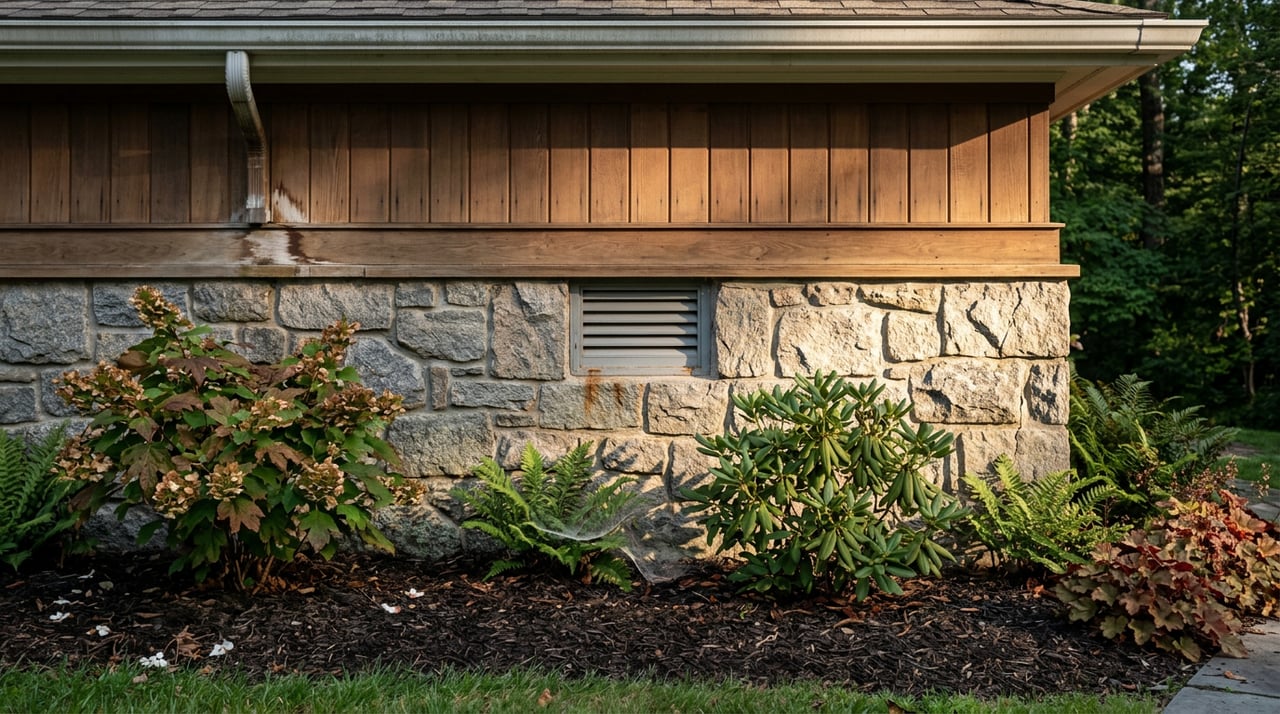
The Boone Due Diligence Clock Doesn't Wait for Your Radon Results
August 27, 2026
August 27, 2026
A buyer relocating from Charlotte or Atlanta signs a Boone contract, wires a due diligence fee to the seller, and exhales. The house is off the market. The inspection is scheduled. It feels like the hard part is over.
It isn't. In North Carolina, that fee the buyer just sent is gone the moment the seller cashes it, whether the deal closes or falls apart three weeks later over something the general inspector never tested for. And in Boone, three of the things most likely to go wrong with a mountain property, radon exposure, well water, and a septic system, sit outside what a standard home inspection covers. The clock that started when the fee cleared doesn't pause to let a buyer discover that.
North Carolina is the only state that structures its standard residential contract this way. Under the NC Real Estate Commission's Form 2-T, a buyer pays two separate amounts at contract signing: earnest money, which sits in an escrow account and comes back to the buyer if they terminate during the due diligence period, and a due diligence fee, which goes straight into the seller's pocket and stays there no matter why the buyer walks away. The NCREC bulletin on due diligence fees is direct about this: the fee is nonrefundable unless the seller materially breaches the contract, a narrow exception that rarely applies.
That fee buys the buyer a due diligence period, typically two to three weeks, during which they can inspect the property and walk away for any reason without losing their earnest money. What it doesn't buy is more time. If the radon test comes back elevated on day 19 of a 21-day window, the buyer's options are to negotiate fast, extend the period if the seller agrees, or let the deadline pass and lose leverage along with the fee.
North Carolina updated Form 2-T earlier this year to soften one part of this timing. Previously, missing the fee wire by even a few hours past midnight on the effective date could put a buyer in technical breach. The 2026 revision to Paragraph 1(i) gives buyers until the end of the next banking day to deliver the fee before that risk kicks in. It's a small fix, but it tells you how unforgiving the original mechanism was, and still is, everywhere else in the contract.
A standard North Carolina home inspection covers the roof, foundation, electrical panel, plumbing, HVAC, attic, and crawlspace. It does not include radon, well water, or septic evaluation unless the buyer adds them separately. In a Piedmont subdivision on municipal water and sewer, that's rarely a problem, because there's no well or septic system to test and radon risk varies less by property. In Boone, all three gaps matter at once.
| Add-on test | What it checks | Typical cost | Why it matters in Boone |
|---|---|---|---|
| Radon | Indoor air concentration over 48+ hours | Roughly $150 added to the inspection | Watauga County sits in EPA Radon Zone 1, the agency's highest risk category |
| Well water | Bacteria, nitrates, and other contaminants | Roughly $200 to $350 | Most rural Watauga properties aren't connected to municipal water |
| Septic | Tank location, condition, and permit match | Roughly $200 to $350, more if pumping is needed | Municipal sewer doesn't reach most of the county outside town limits |
None of these show up automatically on the inspection report a buyer's lender or agent glances at first. Each one requires a separate call, a separate technician, and its own turnaround time, and all three have to land inside the same fixed window that started ticking when the nonrefundable fee cleared.
Radon is odorless and invisible, which is exactly why the EPA assigns risk by geology rather than by house age or condition. Watauga County carries an EPA Radon Zone 1 designation, meaning the predicted average indoor screening level exceeds 4.0 pCi/L, the agency's action threshold, largely because of the granite and fractured bedrock that define the High Country's terrain. Recent local test submissions have run well above that threshold, though the public sample size is small enough that any single number should be read as a signal to test, not a precise forecast for a specific address.
If a test does come back elevated, mitigation in the Boone area typically runs $800 to $2,000, according to local radon contractors who work the market regularly. That's a real number to know before writing an offer, because it's a repair cost a buyer can negotiate during due diligence, but only if the result comes back before the window closes. Order the radon test on day one of the period, not after the general inspection report gives a green light on everything the general inspector actually checked.
North Carolina has a requirement that catches a lot of Boone sellers and buyers off guard: when a home with a septic system goes on the market, the septic permit has to be verified to confirm the number of bedrooms advertised matches the number the permit authorizes. A four-bedroom listing sitting on a permit written for three isn't just a paperwork mismatch. It's a capacity question, because the septic system was designed and approved for a specific wastewater load, and a mismatch can turn into a repair, a permit amendment, or a renegotiated price mid-transaction.
This matters more in Boone than it would in a market built on municipal sewer, because most rural Watauga properties run on private well and septic by necessity, not by choice. The county's environmental health functions, along with those of Ashe and Alleghany counties, are handled through AppHealthCare's septic system program, which issues and tracks the permits a buyer's closing attorney or agent should be pulling records on well before the due diligence deadline. A buyer who waits until week two to ask "does anyone know if this septic permit matches the listing" is asking the question at exactly the wrong point in the fee's nonrefundable clock.
The practical fix isn't complicated, but it does require treating due diligence as a sequence rather than a single appointment. A reasonable order looks like this:
Buyers moving from states with a traditional inspection contingency sometimes treat the whole due diligence period as slack time. In Boone, the slack disappears fast once radon, well, and septic are added to a general inspection that was never built to cover them.
Is a radon test required to close on a home in Boone? No. North Carolina law doesn't require radon testing to complete a sale, but the geology in Watauga County makes it one of the more consequential optional tests a buyer can skip.
What happens if my test results come back after the due diligence period ends? The due diligence fee and any remaining leverage to negotiate repairs are typically gone once the window closes, which is why ordering the slowest tests, radon and septic, on the first day of the period matters more than it would in a market without this fee structure.
Does the seller have to disclose a septic permit mismatch? North Carolina requires the septic permit to be verified against the advertised bedroom count when a home with a septic system is listed, which is a separate check from the general seller disclosure form and one worth confirming directly with the county rather than assuming it's been done.
Boone rewards buyers who treat the due diligence period as a plan instead of a placeholder. If you're weighing an offer on a High Country property, or preparing to list one and want to get ahead of a septic or radon question before a buyer's inspector finds it first, the Leslie Eason Team has spent years walking both sides of this exact clock. Contact us before you write the offer, not after the fee clears.


Best Hiking Trails in North Carolina
Local Trail Guides, Scenic Overlooks & Beginner-Friendly Hikes Near Boone & Beyond
Real estate is more than a transaction—it's a significant life decision. Our team provides the expertise, support, and strategy needed to help you move forward confidently. Let us guide your next chapter.

Leslie Eason Real Estate Team
(828) 484-4811
[email protected]
OPEN HOURS
Monday - Saturday
8:30AM - 7:30PM
Sunday
12:00PM - 5:00PM
774 E King St Unit A Boone, NC 28607